Background
Flatfire Grill was my team capstone project while completing my Master’s in Product Design & Development Management at Northwestern University. The capstone was designed to simulate a real-world product development environment, where cross-functional team members bring different perspectives and responsibilities across research, design, engineering, business strategy, and product development.
Flatfire Grill was my team capstone project while completing my Master’s in Product Design & Development Management at Northwestern University. The capstone was designed to simulate a real-world product development environment, where cross-functional team members bring different perspectives and responsibilities across research, design, engineering, business strategy, and product development.
The project brought together the core disciplines of the program, including product strategy, human-centered design, market research, industrial design, prototyping, business modeling, and product development planning.
As a team, our goal was to identify a meaningful product opportunity, understand customer and market needs, develop a differentiated concept, and evaluate how the product could be designed, manufactured, positioned, and brought to market.
Challenge
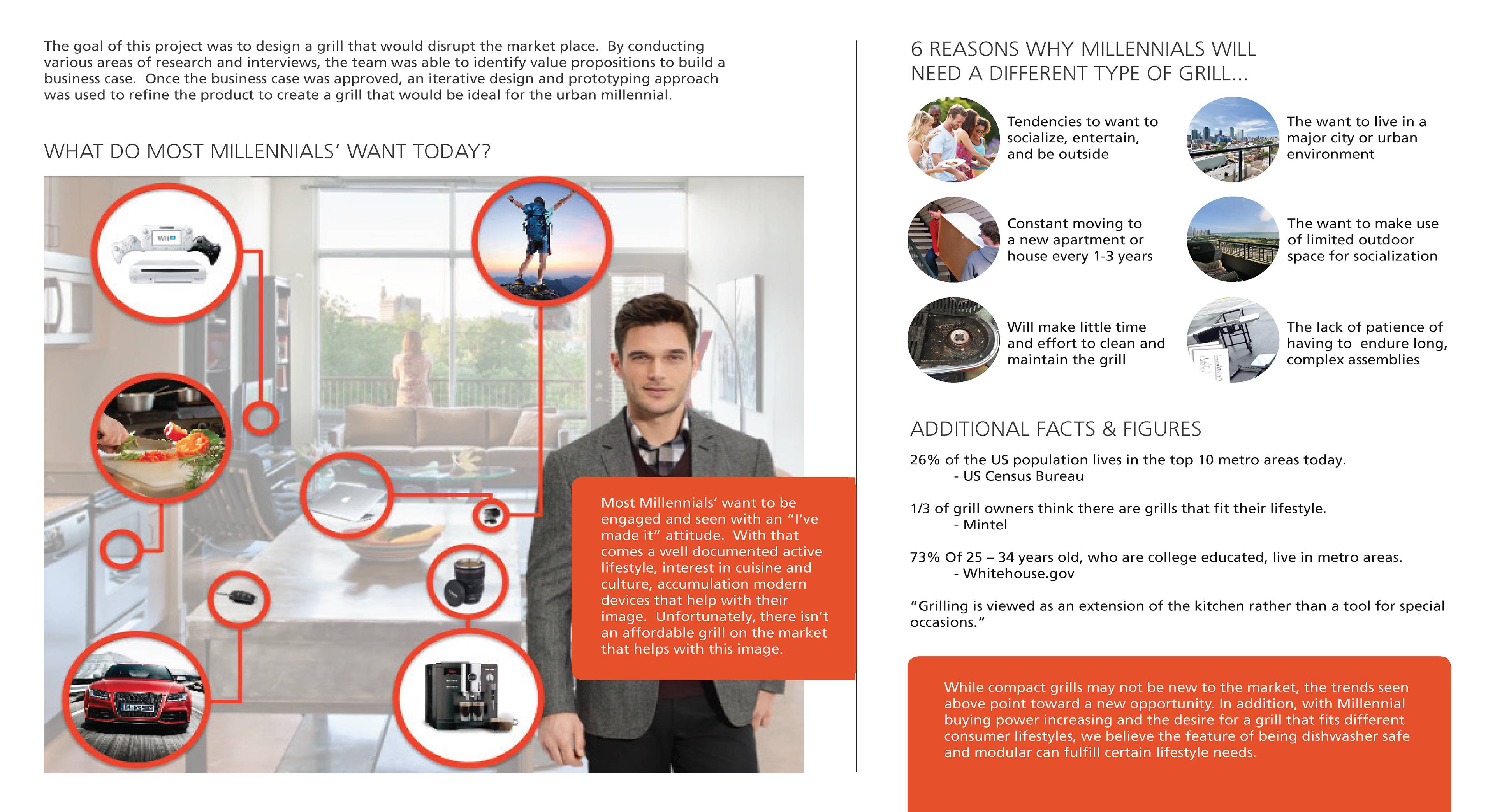
Outdoor cooking products often require tradeoffs between performance, portability, ease of use, storage, and the overall cooking experience. Many grills and outdoor cooking tools are designed around either convenience or performance, but not always both.
Outdoor cooking products often require tradeoffs between performance, portability, ease of use, storage, and the overall cooking experience. Many grills and outdoor cooking tools are designed around either convenience or performance, but not always both.
The challenge was to identify a product opportunity that could better serve users looking for a more flexible, approachable, and enjoyable cooking experience — while also considering real-world constraints such as usability, materials, cost, manufacturing, retail positioning, and market differentiation.
Framing the work
Across the project, the central question became:
How might we design an outdoor cooking product that improves usability, portability, and the overall cooking experience while remaining desirable, feasible, and commercially viable?
Across the project, the central question became:
How might we design an outdoor cooking product that improves usability, portability, and the overall cooking experience while remaining desirable, feasible, and commercially viable?
Team Structure & Collaboration
This was a group capstone project structured to mirror how product teams operate in real organizations. Team members worked cross-functionally across research, product strategy, industrial design, engineering considerations, prototyping, business modeling, and go-to-market planning.
This was a group capstone project structured to mirror how product teams operate in real organizations. Team members worked cross-functionally across research, product strategy, industrial design, engineering considerations, prototyping, business modeling, and go-to-market planning.
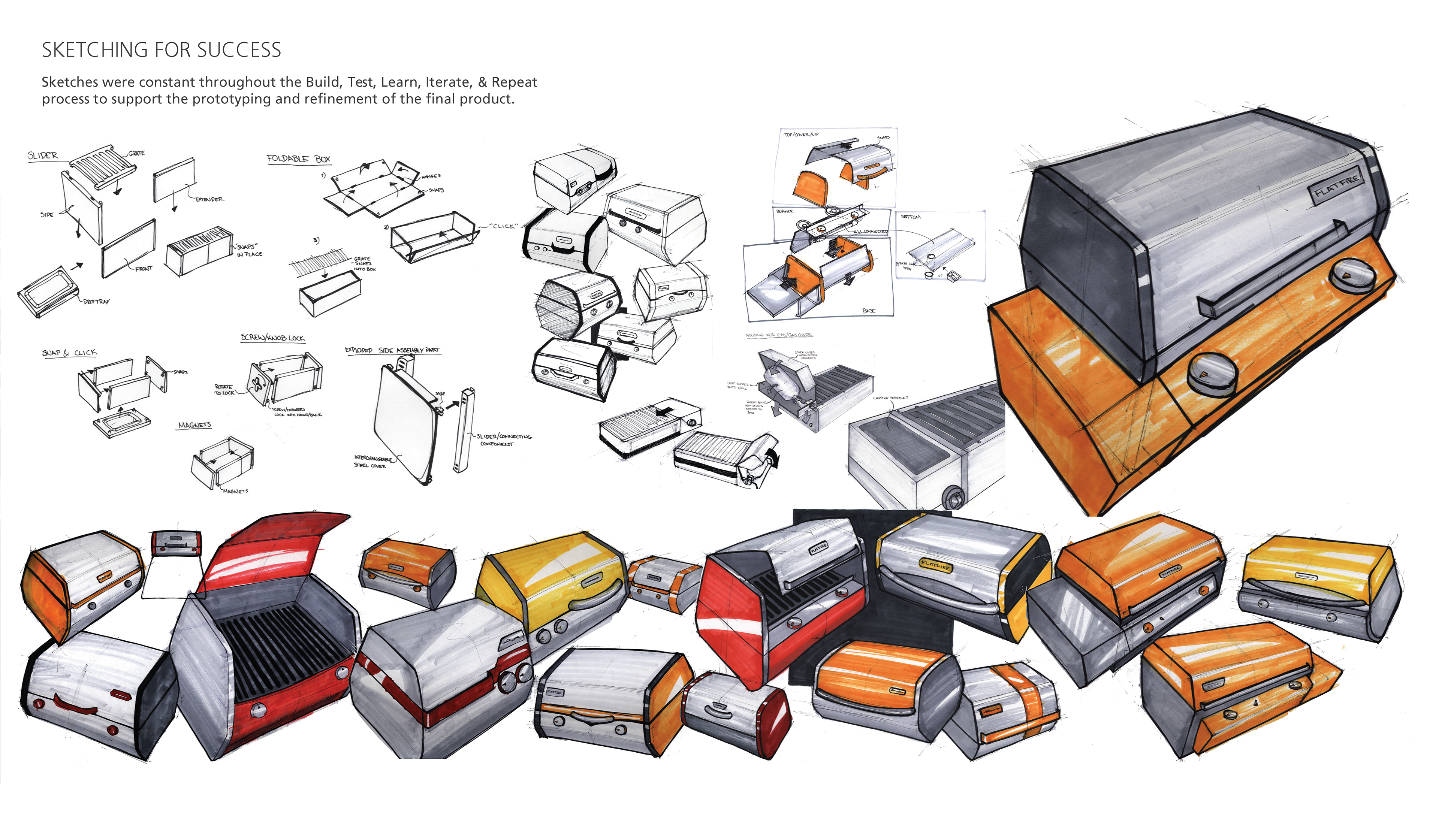
Within the team, I served as the lead industrial designer, helping translate user needs and product requirements into physical product concepts, sketches, form studies, and early models.
The team environment required us to align different perspectives, make tradeoffs, divide ownership across workstreams, and bring specialized contributions together into one cohesive product development story.
My Role & Approach
As part of the capstone team, I contributed across product strategy, research, industrial design, concept development, prototyping, and business planning. I also served as the lead industrial designer, creating sketches, models, and visual concepts that helped the team explore form, function, usability, and product experience.
As part of the capstone team, I contributed across product strategy, research, industrial design, concept development, prototyping, and business planning. I also served as the lead industrial designer, creating sketches, models, and visual concepts that helped the team explore form, function, usability, and product experience.
My work included:
•Collaborating with cross-functional teammates to define the opportunity space, product vision, and development approach.
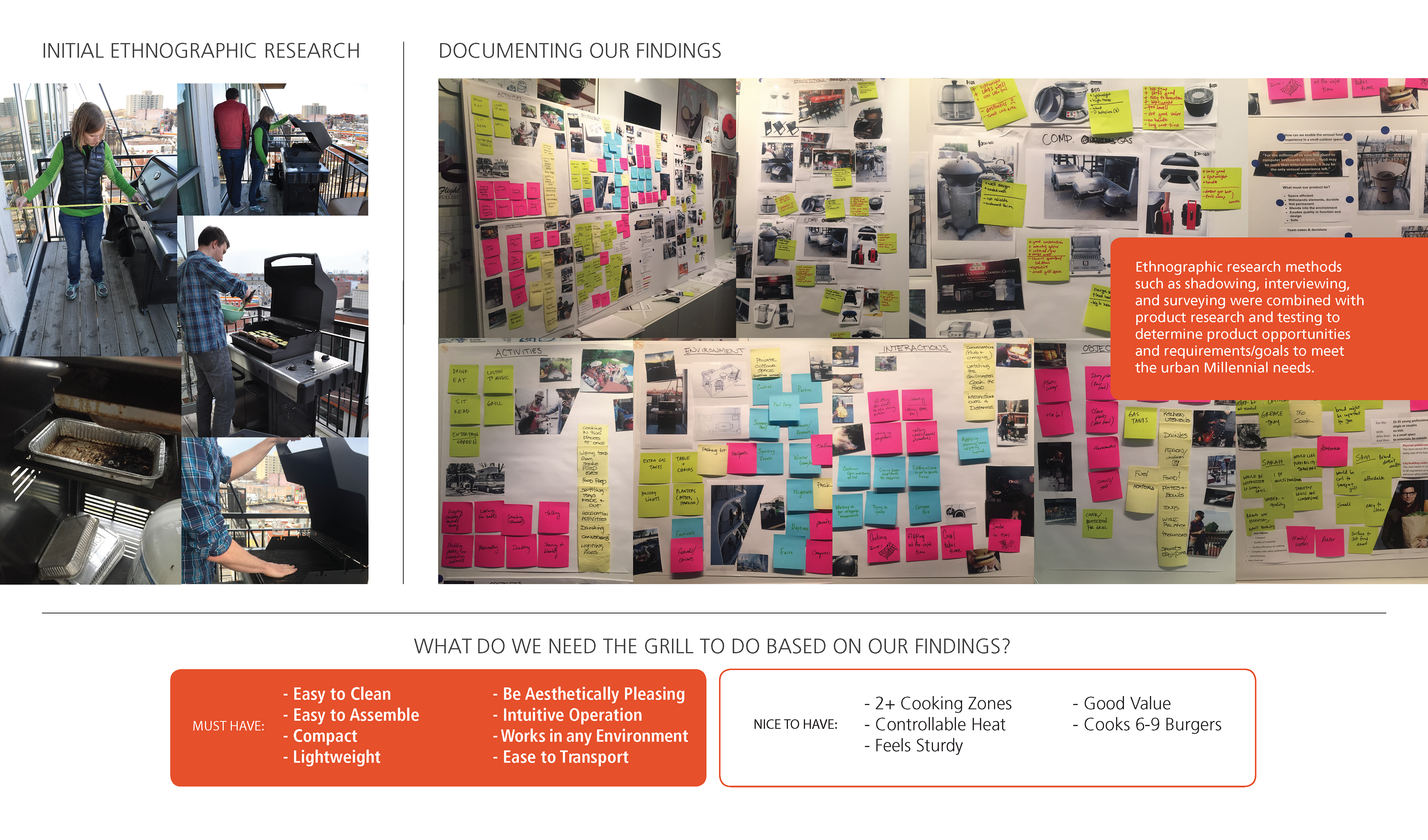
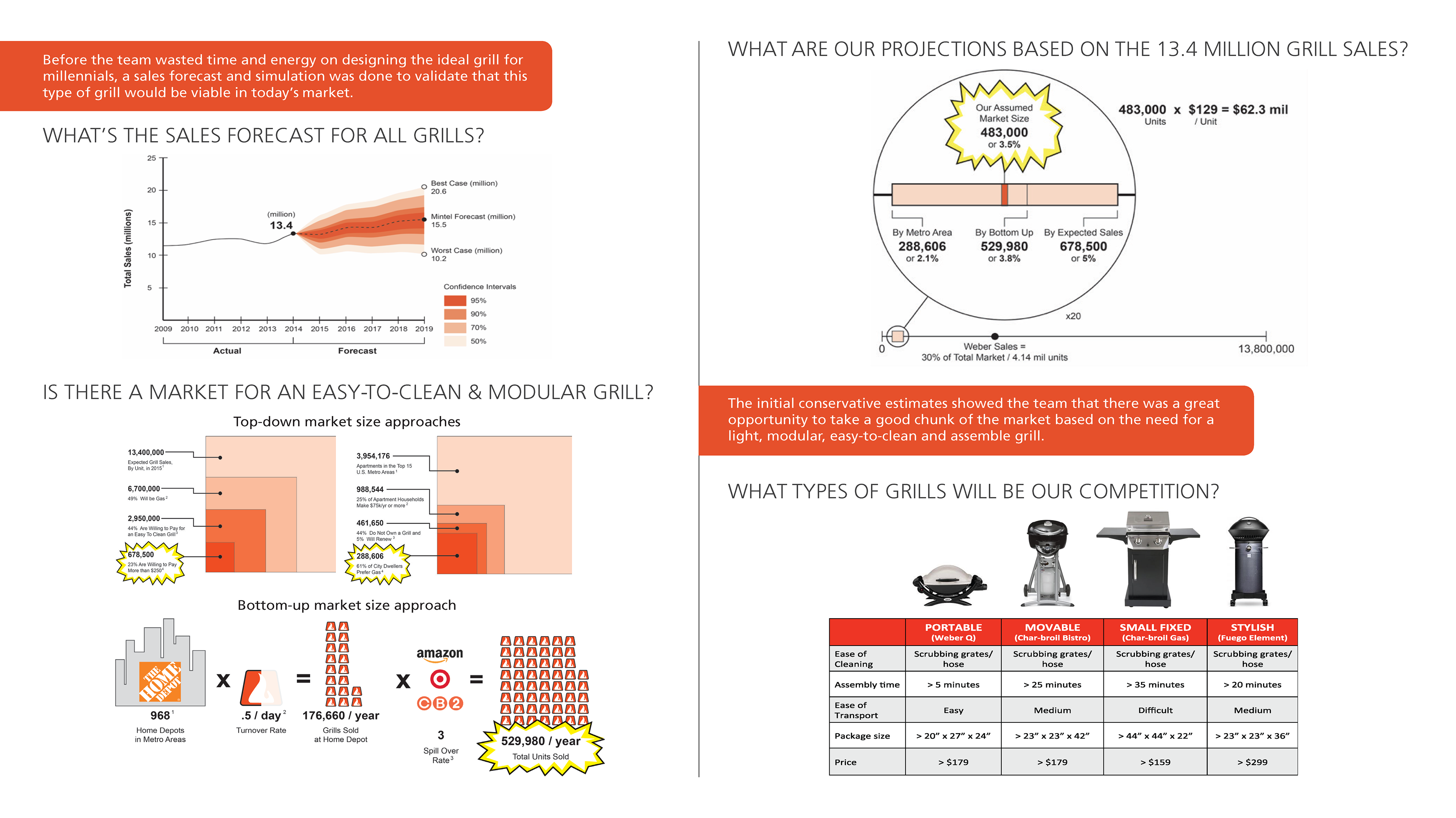
•Conducting market and competitive research to understand outdoor cooking trends, product gaps, consumer needs, and category opportunities.
•Identifying user pain points and unmet needs related to setup, cooking, storage, portability, cleaning, and overall ease of use.
•Translating research insights into product requirements, design principles, and opportunity areas.
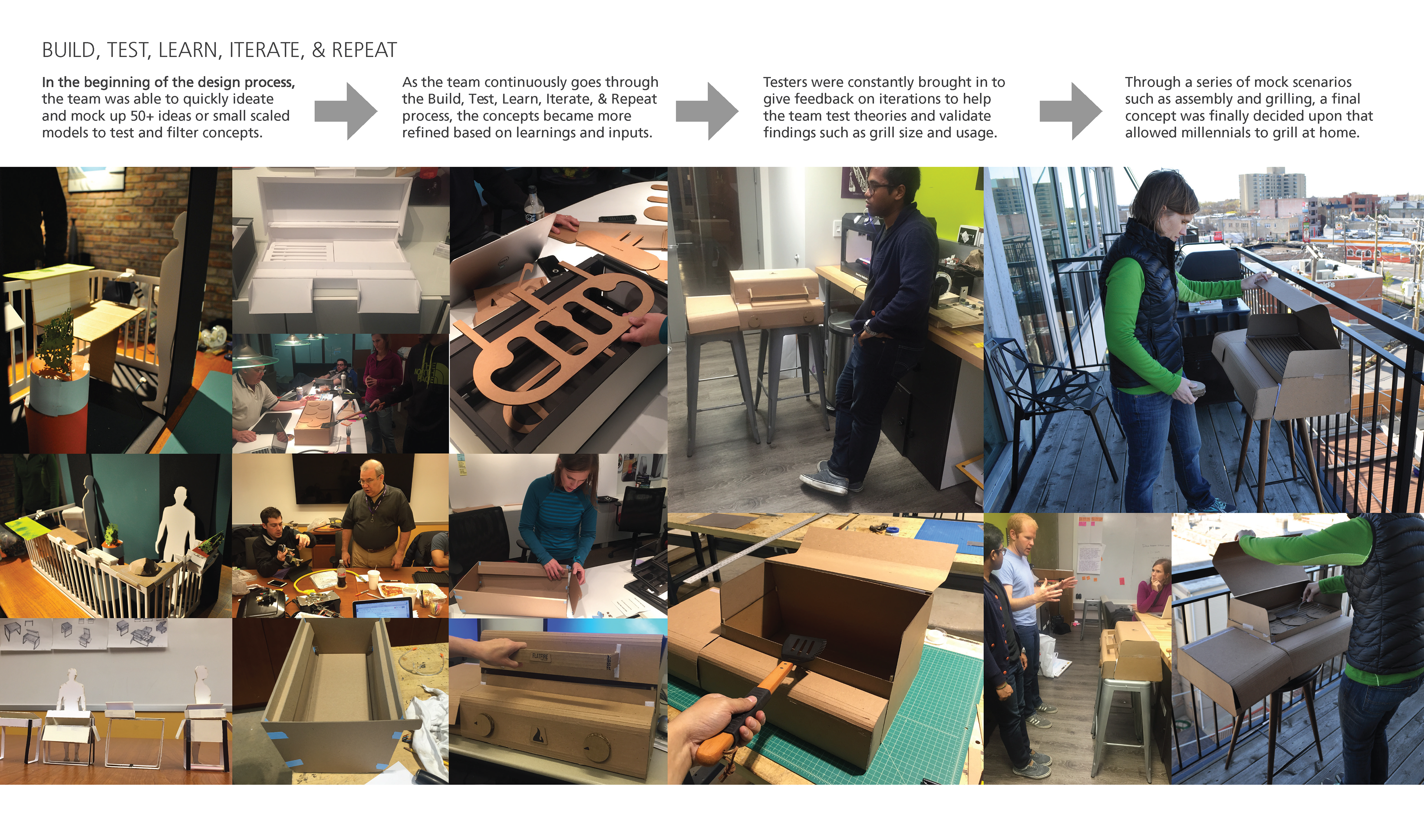
Leading industrial design exploration through sketches, form studies, physical models, and concept visuals.
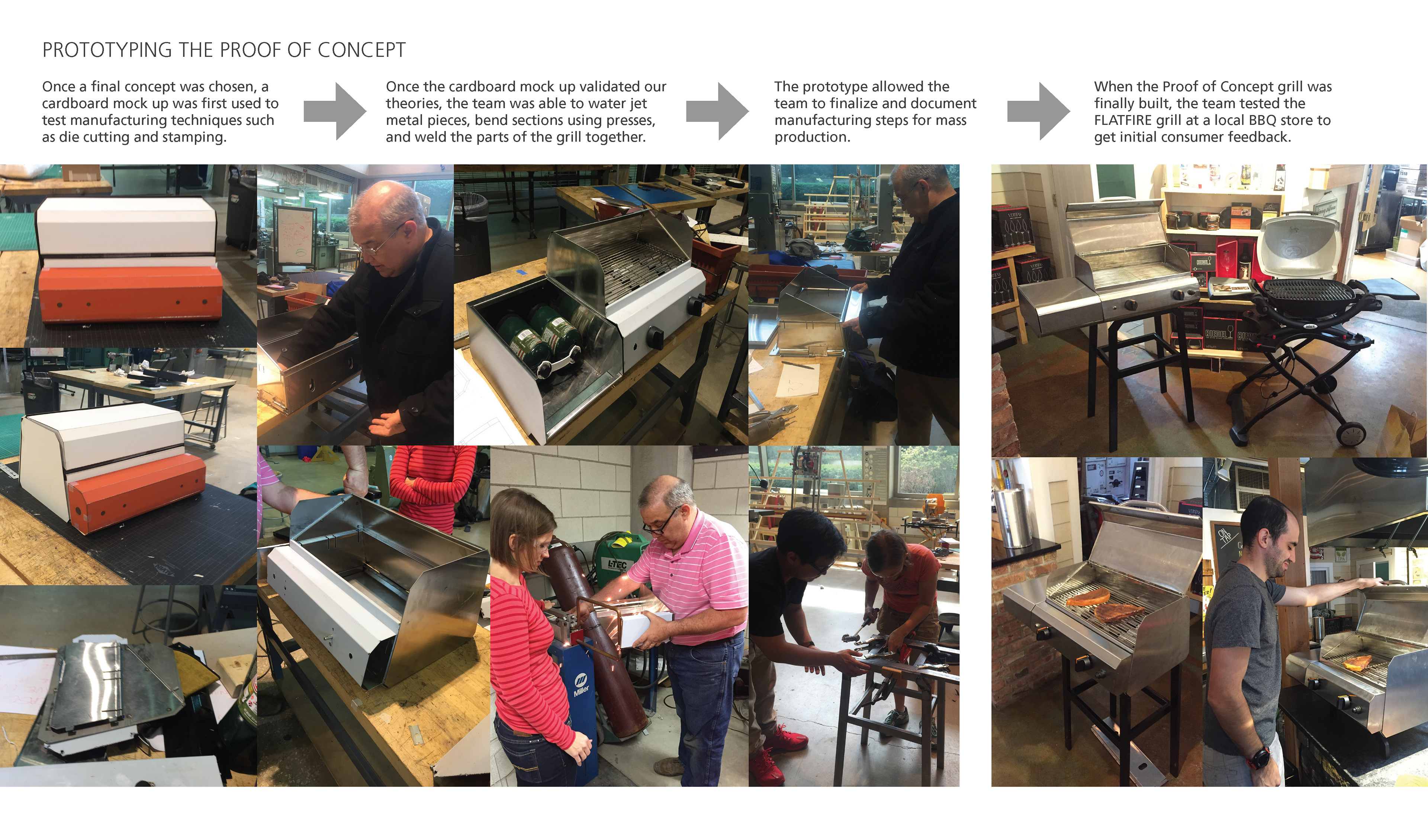
•Developing product concepts, prototypes, and experience scenarios to explore potential solutions.
•Evaluating concepts through the lens of desirability, feasibility, viability, manufacturability, usability, and market differentiation.
•Supporting business model thinking, product positioning, target customer definition, and go-to-market considerations.
•Helping connect industrial design, engineering, user experience, and business strategy into a cohesive product development direction.
•Collaborating with cross-functional teammates to define the opportunity space, product vision, and development approach.
•Conducting market and competitive research to understand outdoor cooking trends, product gaps, consumer needs, and category opportunities.
•Identifying user pain points and unmet needs related to setup, cooking, storage, portability, cleaning, and overall ease of use.
•Translating research insights into product requirements, design principles, and opportunity areas.
Leading industrial design exploration through sketches, form studies, physical models, and concept visuals.
•Developing product concepts, prototypes, and experience scenarios to explore potential solutions.
•Evaluating concepts through the lens of desirability, feasibility, viability, manufacturability, usability, and market differentiation.
•Supporting business model thinking, product positioning, target customer definition, and go-to-market considerations.
•Helping connect industrial design, engineering, user experience, and business strategy into a cohesive product development direction.
Outputs & Results
•Developed a team-based product concept for an outdoor cooking experience focused on usability, portability, and user-centered design.
•Led industrial design exploration through product sketches, form studies, physical models, and concept visuals.
•Defined target user needs, product requirements, competitive positioning, and market opportunity.
•Explored materials, form factor, functional requirements, manufacturing considerations, and retail positioning.
•Built a capstone-level product development story connecting customer insight, industrial design, prototyping, business strategy, and launch considerations.
•Developed a team-based product concept for an outdoor cooking experience focused on usability, portability, and user-centered design.
•Led industrial design exploration through product sketches, form studies, physical models, and concept visuals.
•Defined target user needs, product requirements, competitive positioning, and market opportunity.
•Explored materials, form factor, functional requirements, manufacturing considerations, and retail positioning.
•Built a capstone-level product development story connecting customer insight, industrial design, prototyping, business strategy, and launch considerations.
Outcome
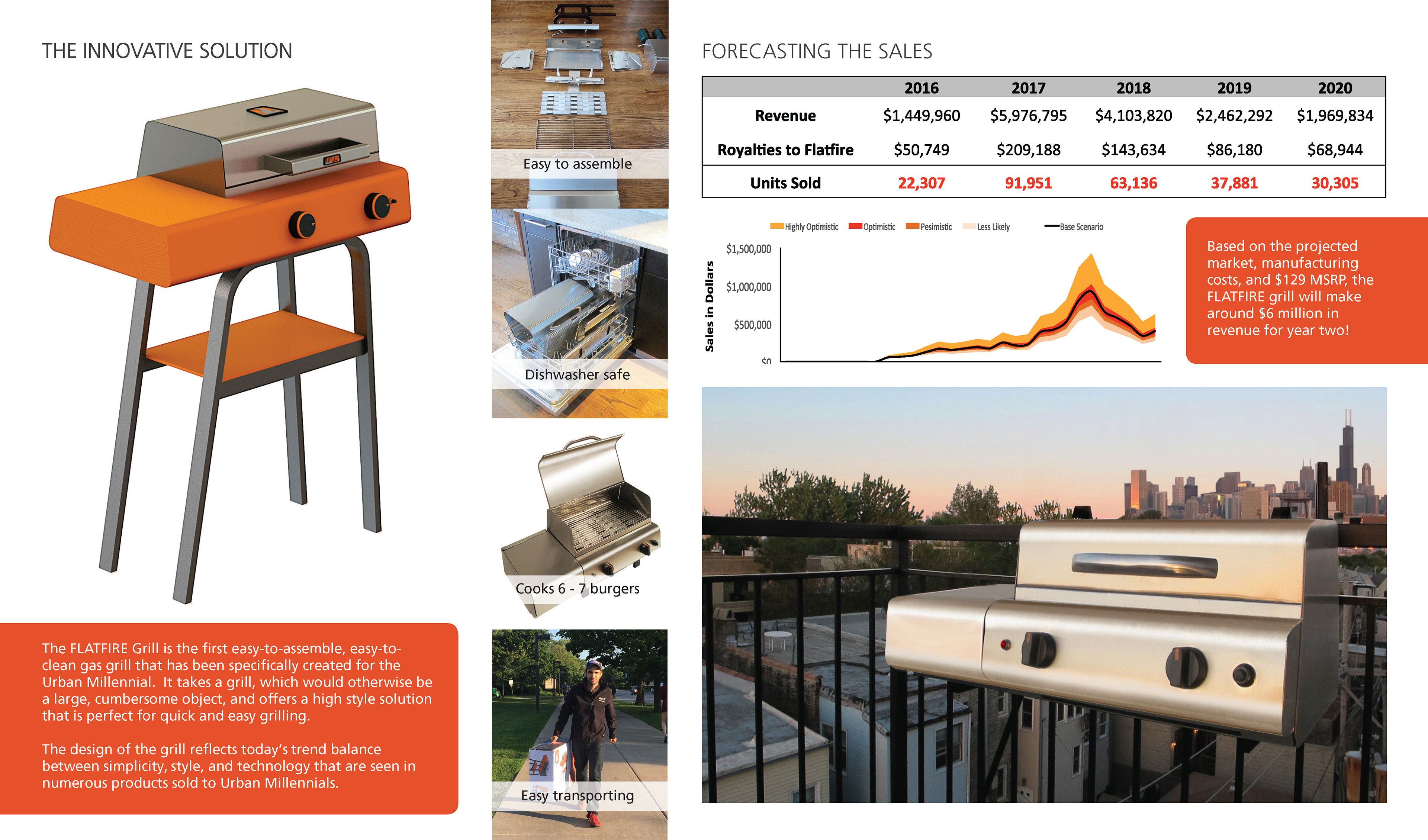
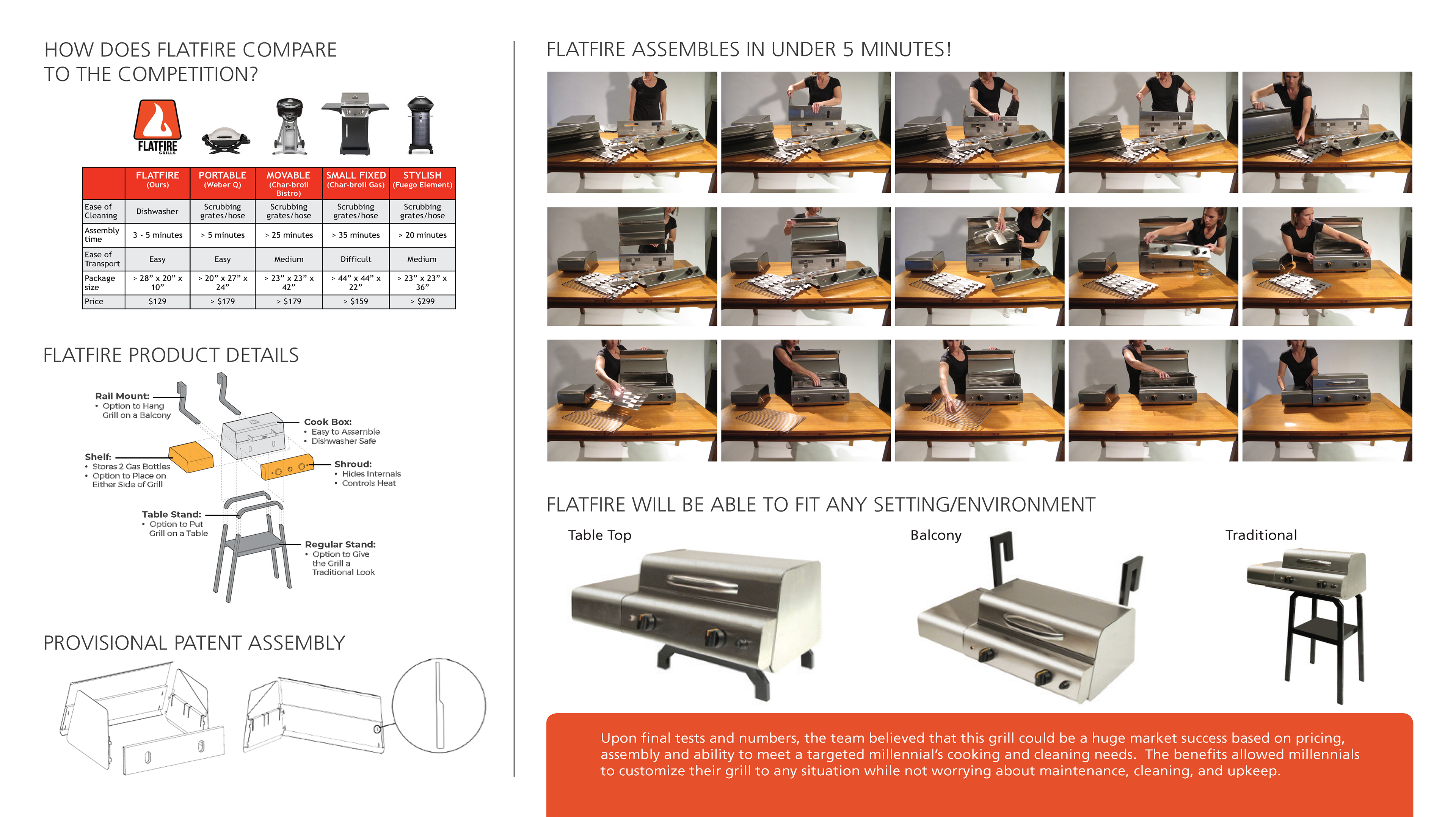
Flatfire Grill demonstrated how a cross-functional team could take a product idea from early opportunity framing through concept development, prototyping, and business evaluation. The project helped me build a strong foundation in translating customer needs into tangible product concepts while balancing design desirability, technical feasibility, team collaboration, and business viability.
Flatfire Grill demonstrated how a cross-functional team could take a product idea from early opportunity framing through concept development, prototyping, and business evaluation. The project helped me build a strong foundation in translating customer needs into tangible product concepts while balancing design desirability, technical feasibility, team collaboration, and business viability.
This work continues to inform how I approach product, service, and experience design today: by grounding ideas in real user needs, working across disciplines, evaluating tradeoffs early, and connecting design decisions to market and business realities.
Why This Project Matters
Flatfire Grill is important in my portfolio because it shows the product development foundation behind my later service design, CX, and strategy work. It demonstrates that I can think beyond research and journeys — into physical product design, prototyping, market validation, business strategy, collaboration, and launch planning.
Flatfire Grill is important in my portfolio because it shows the product development foundation behind my later service design, CX, and strategy work. It demonstrates that I can think beyond research and journeys — into physical product design, prototyping, market validation, business strategy, collaboration, and launch planning.
It also reflects my ability to work in a cross-functional team environment, where different roles, perspectives, and specialties need to come together to define and develop a coherent product direction.